HOW IT WORKS
Why large AI systems are built as a full rack
AMD's new Helios system shows how many AI chips, processors, network parts and programs need to work as a single computer. For everyday users, the technology is mainly noticeable through the capacity, cost and supplier choice in cloud services.
Publicerad 30 July 2026, 20.04
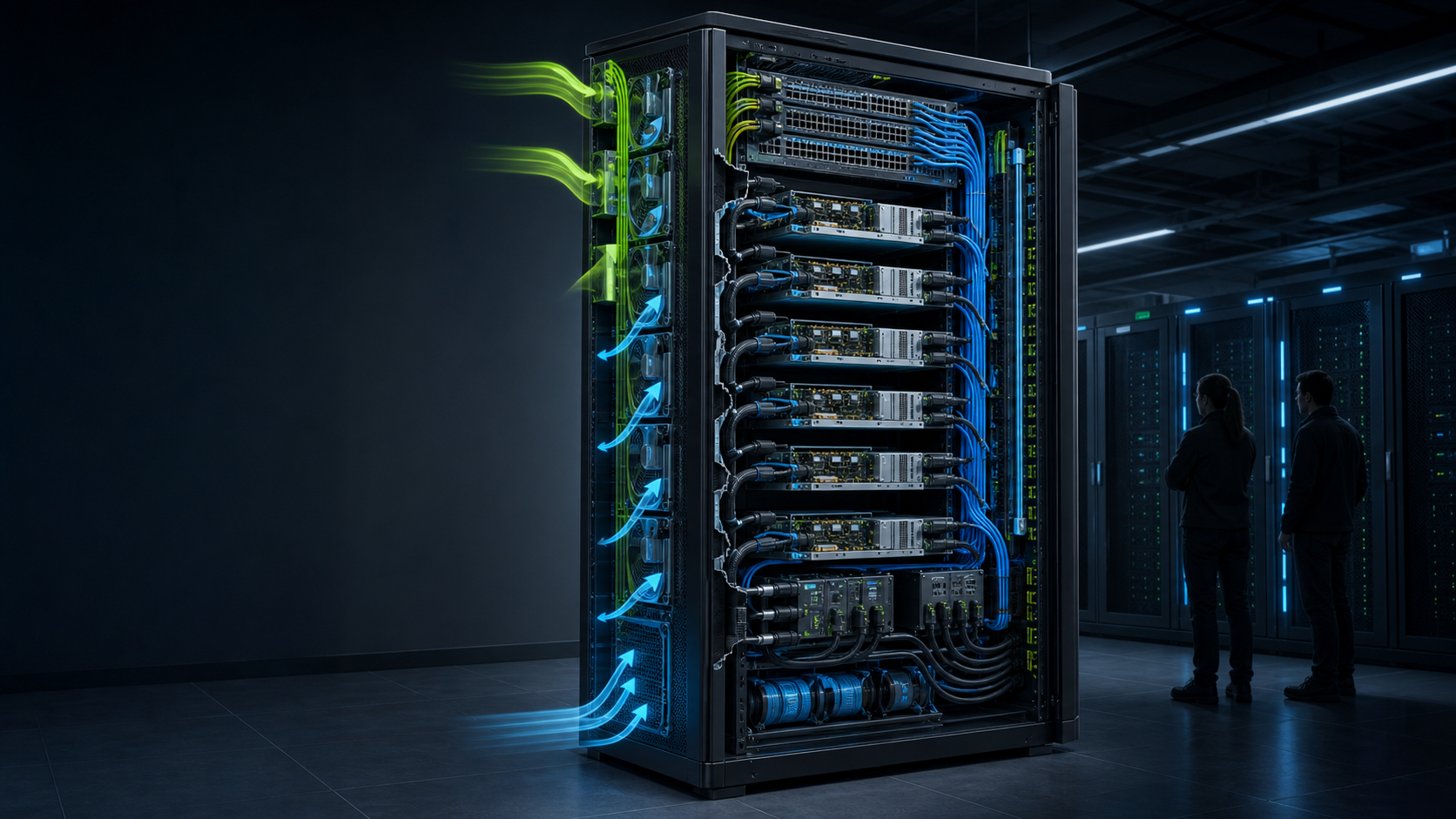
When a regular computer needs more power, you can change the processor or graphics card. For the largest AI models, a single chip is not enough. Thousands of calculations need to be shared between many chips that send data to each other without long waiting times.
Therefore, advanced AI infrastructure is increasingly being built as an entire server rack. A rack is a tall cabinet with several computer drawers. The rack contains graphics processors that do the calculations, regular processors that control the work, fast memory, network equipment, power supply and cooling.
The parts need to function as a system. If the chip can calculate quickly but the network doesn't have time to move the data, the processors are left waiting. If power or cooling is not enough, the entire plant may have to reduce capacity.
AMD demonstrates the same principle in Helios, the company's first rack-mount AI system. According to AMD, the system combines 72 Instinct MI455X GPUs with EPYC processors, Pensando networking and ROCm software in one rack. Helios is built to train large models and run many AI responses in data centers.
AMD describes the architecture as open and adapted to several industry standards. The Open Compute Project, an organization that develops open data center standards, shows why it matters: rack dimensions, power, cooling, monitoring and connectivity need to match as systems get bigger and denser.
This is not a new AI computer for a regular office. AMD is targeting Helios at cloud companies, AI companies and other large data centers. The company does not publish a regular store price tag or timetable for Swedish customers in the launch documents.
AMD also compares Helios to a competing solution, citing higher performance and more AI responses per dollar. Those numbers are based on AMD's own calculations, modeling and pricing assumptions. They are not an independent measurement of a finished system in Swedish operation.
Därför spelar det roll
Most Swedish businesses will not buy their own AI rack. They can still be affected when cloud providers choose the infrastructure behind their services. More vendor options can affect capacity and price, but real cost also depends on electricity, cooling, software, operation and how well the model uses the system.
Det här kan du göra
- Compare the price, response time and availability of the entire service. A fast chip does not tell what a finished AI workflow costs.
- Ask the cloud provider where the data is processed and which regions, security requirements and contractual terms apply.
- Ask for measurements on your own model and workload rather than relying on the vendor's theoretical peak figures.